
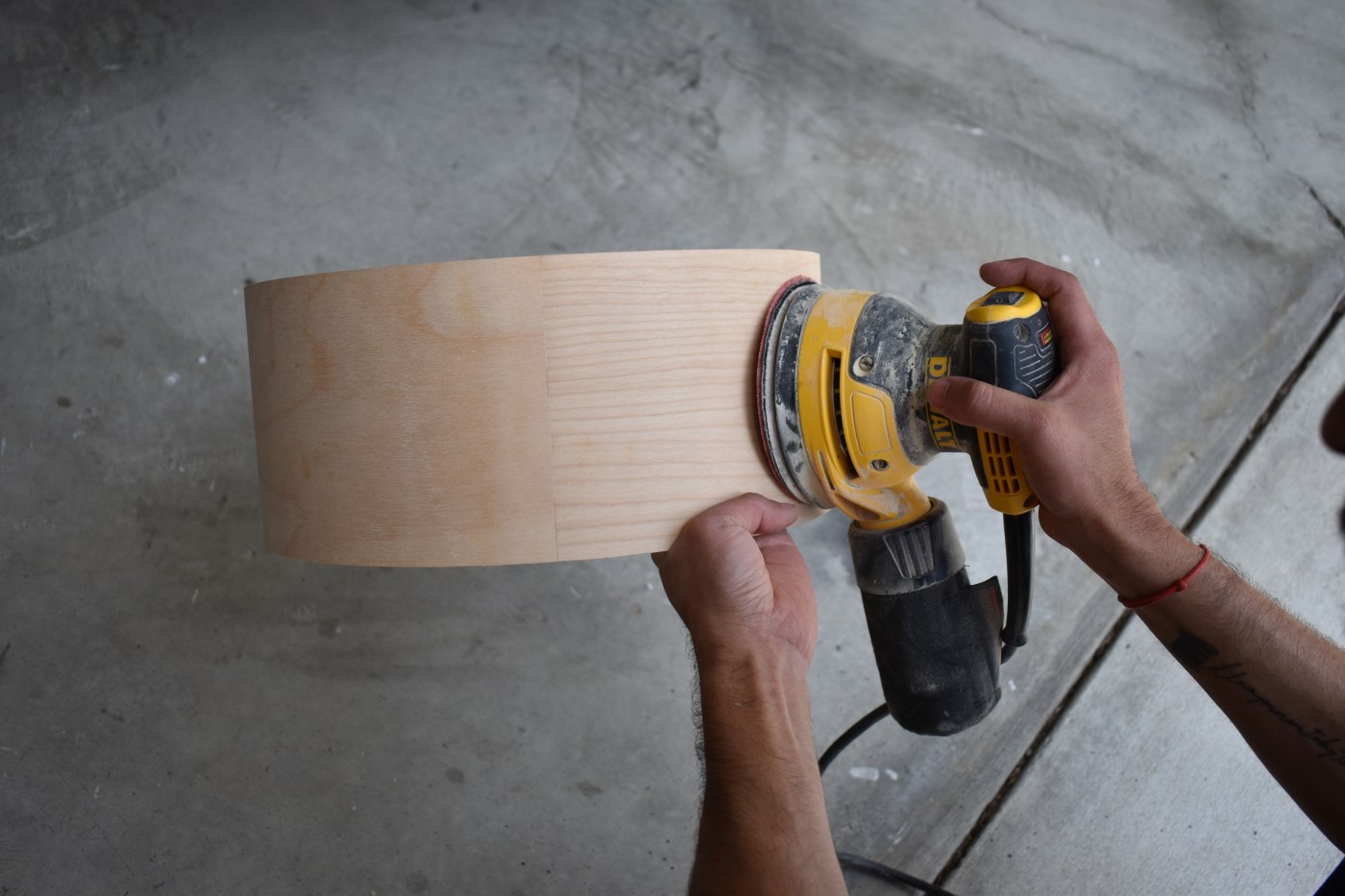
Sanding drums may not be the most exciting part of making drums, but it’s a necessary step to achieve a smooth and flawless finish. When done correctly, sanding can prevent wood imperfections from being highlighted after staining and finishing.
Before you start sanding, it’s crucial to consider the type of stain or finish you’ll be using. One thing to be mindful of is grain raising, which happens when water gets on the wood and causes the fibers to swell. When the wood dries, it feels rough to the touch. If you sand your drum down and then get it wet, it will feel like you didn’t sand it at all. This can be a problem if you’re using a water-based finish or stain since it can become rough again. However, if you’re using an oil-based product, you can skip this step.
Fortunately, you can prevent grain raising by pre-raising the grain before sanding and staining with a water-based product. To do this, spray both the inside and outside of the raw drum shell with water or wipe it down with a damp towel. Allow it to dry, and the grain will be raised. Once the shell is dry, you can begin sanding.
You can choose to use an electric sander or sand by hand, depending on your preference. Be careful with an electric sander as it’s easy to sand too much and end up sanding through a ply of the shell.
Start sanding with 120 grit sandpaper, then gradually work your way up to 150, 180, and finally 220 grit for the outside of the drum shell. For the inside of the shell, you can go a bit further and use 320 grit sandpaper, finishing off with 400 grit for a nice and smooth interior. Stop at 220 for the exterior since it’ll be covered with wood finish.
To avoid over sanding, mark up the shell with a carpenter’s pencil between grits. Once the marks are sanded off, move on to the next grit. After going through all the grits, give the drum shell a final inspection for any blemishes to remove.
Sanding drums may not be the most thrilling part of making drums, but it’s necessary to achieve a perfect finish. By following these tips, you can avoid mistakes and produce a drum that looks and feels professional.
 Fountain Drums
Leave a comment